Leave Your Message
You know, the global market for flip-over nursing beds is really shifting—hospitals and long-term care homes are all looking for safer ways to reposition patients. These beds can rotate someone without needing as much manual lifting, which is a huge relief for staff. Plus, they can help with things like bathing, getting dressed, relieving pressure sores, and even overnight care. But here's the thing: just having a rotating frame isn't enough to make these beds work well. There's more to it than that.
So, when you look at the big names in this space, you've got VENDLET, Arjo, LINET, Stryker, Invacare, Savaria, and Wissner-Bosserhoff—they're pretty much the go-to guys. Their systems aren't all the same though, you know? They differ in stuff like turning angles, the mattress design, how the side-rails are controlled, whether they have transfer functions, and how easy they are to clean. Some of them are really focused on intensive care, while others are more for residential nursing homes. If you're in the market, it's worth comparing things like user training, service coverage, spare parts, warranty terms, and whether they'll work with the hoists you already have. It's not just about the specs—you gotta think practically about what fits your setup.
You know, Dr. Barbara Bowers—she's a well-known researcher in long-term care—once said something that really sticks with me: “Good care technology should reduce effort without reducing human contact.” Honestly, that's the benchmark I keep coming back to when I think about any Flip Over Nursing Bed. The way I see it, a good device should make the caregiver's job easier and safer, but it shouldn't turn the patient into a piece of freight. People aren't cargo, right? And that's where the tiny things matter a lot. The details really are everything.
Honestly, a machine that turns smoothly, has clear controls, and doesn't make a racket can turn a brutal night shift into something bearable. But here's the thing – those flashy product pages? They never mention the storage that fills up way too fast, the cleaning that eats into your break time, or the learning curve your team has to struggle through. That's a pretty big gap to leave out, if you ask me.
So, this guide takes a look at manufacturers from all over the world, right? But we don't just pick a winner – we're basing everything on real-world evidence, how easy things are to use in a clinical setting, how well they're built, and what kind of after-sales support you actually get. And honestly, there's no one-size-fits-all answer here. I mean, the right choice really depends on stuff like patient weight, how mobile they are, their skin condition, even the size of the room and how many staff you have. Plus, product specs are always changing, so you should always double-check the latest info yourself. When you compare carefully, you'll notice that every model has its weak points. But that's not a bad thing – it's just how it is. You know, it's just part of responsible purchasing - like, it comes with the territory.
What Is a Flip Over Nursing Bed?
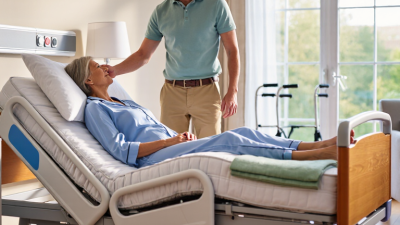
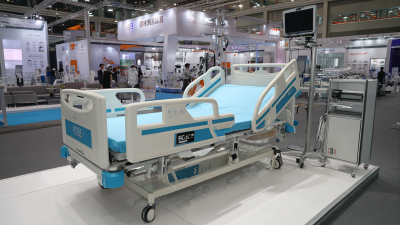
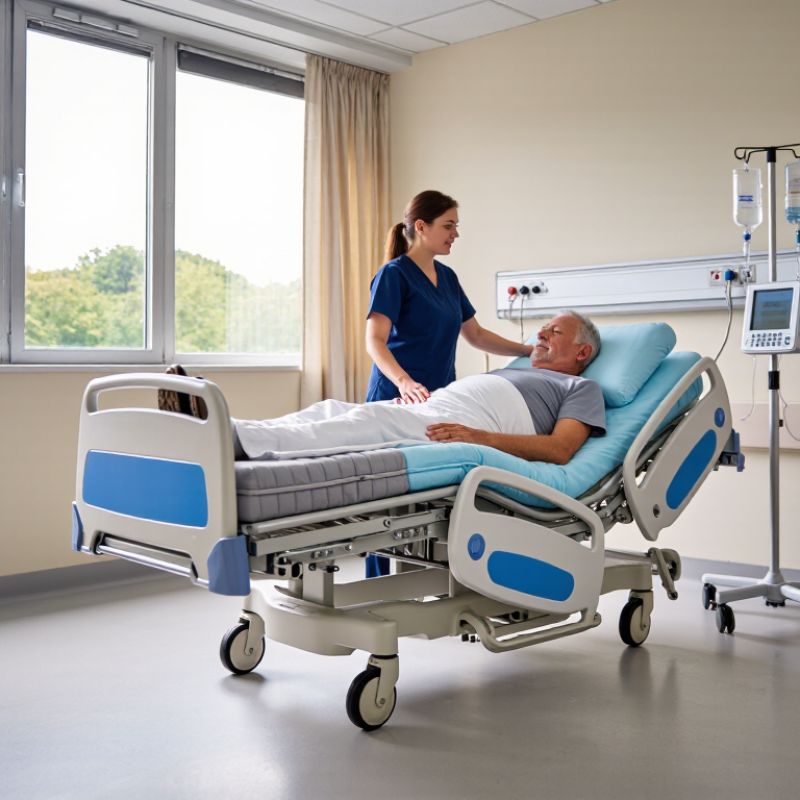
A flip over nursing bed is an Electric Care Bed designed to rotate or tilt part of the mattress platform. It helps caregivers reposition a person with less lifting and pulling. Some models support lateral turning, sitting assistance, leg elevation, and controlled backrest movement. The exact motion differs by design, so buyers should inspect the operating range carefully.
This equipment can support safer daily care, especially for people with limited mobility. It may reduce repeated manual handling, but it cannot remove every transfer risk. The WHO Global Report on Assistive Technology (2022) estimates that more than 2.5 billion people need assistive products worldwide. That figure may reach 3.5 billion by 2050. A High-Quality Flip Over Nursing Bed should therefore offer stable locking, emergency lowering, washable surfaces, and clear caregiver controls. Clinical assessment still matters. A bed that fits one patient may feel unsafe for another.
Tips: Check the patient’s weight, height, contractures, and transfer ability before purchase. Ask whether the turning angle is adjustable. Test the hand control beside the mattress, not only from a brochure. Confirm side-rail clearance and mattress compatibility. The bed should move slowly and quietly, with no sudden jolts. Care teams should receive practical training. Small mistakes happen. Regular inspection of motors, casters, brakes, and cables can reveal problems before use.
A flip over nursing bed is a powered care bed designed to assist with controlled lateral repositioning or side-to-side turning of a patient. The term is used broadly in the market, so buyers should verify the actual turning mechanism, angle, safety controls, and applicable medical-bed standards before purchasing.
| Evaluation Dimension | Verified Technical Information | Why It Matters When Comparing Manufacturers |
|---|---|---|
| Product definition | A motorized nursing bed that helps reposition a patient by tilting, rotating, or turning the mattress platform toward one side. | The phrase “flip over” is not a single globally standardized product category; the precise movement should be confirmed in the technical specification. |
| Primary care purpose | Assists with scheduled repositioning, pressure-area management, hygiene care, transfers, and selected nursing procedures. | A suitable design can reduce manual handling demands, but it does not replace clinical assessment or caregiver supervision. |
| Turning or tilt range | Common configurations provide controlled side tilting or lateral rotation; the exact angle varies by design and patient position. Some systems are designed for partial turns rather than a complete 180-degree flip. | The maximum angle, movement speed, preset positions, and emergency stop function should be checked rather than inferred from the product name. |
| Bed adjustment functions | Typical medical-bed functions may include height adjustment, backrest elevation, knee or leg elevation, and a reclining or profiling position. | A broader adjustment range improves compatibility with nursing, transfer, examination, and daily-care workflows. |
| Patient weight rating | Safe working load is product-specific and may include the patient, mattress, accessories, and applied equipment. It must be taken from the manufacturer’s stated rating. | Comparisons should use the complete safe working load, not only the patient-weight figure. |
| Side-rail protection | Beds may use split, full-length, or fold-down side rails with integrated controls or access features. | Rail height, locking reliability, gap dimensions, and compatibility with turning movement are key patient-safety considerations. |
| Mattress compatibility | The mattress should match the bed platform dimensions, profiling movement, turning mechanism, and any required retaining or positioning system. | An incompatible mattress can restrict movement, increase shear, or reduce the effectiveness of pressure-care functions. |
| Control system | Common options include a patient handset, caregiver control panel, lockout functions, position memory, and emergency-stop controls. | Controls should be clearly labeled, protected against unintended activation, and accessible to authorized caregivers. |
| Safety and sensing | Relevant features may include movement limits, obstruction detection, low-voltage controls, mechanical emergency release, battery backup, and audible or visual alerts. | These features help reduce risks during power loss, transfers, rail interference, or unexpected resistance. |
| Electrical and medical-bed standards | The IEC 60601 series addresses safety of medical electrical equipment; IEC 60601-2-52 specifically covers the basic safety and essential performance of medical beds. ISO 14971 addresses risk management for medical devices. | Buyers should request current test reports, declarations, and market-specific regulatory documentation instead of relying only on marketing claims. |
| Cleaning and infection control | Smooth, sealed, corrosion-resistant surfaces and removable mattress platforms can support routine cleaning and disinfection. | The cleaning-agent compatibility, ingress protection, and access to joints and mechanisms should be documented. |
| Mobility and transport | Typical features include lockable castors, directional steering, push handles, transport bumpers, and battery operation where specified. | Turning radius, castor size, floor clearance, and total bed width affect movement through corridors and doorways. |
| Power-failure operation | Depending on the model, battery backup may allow temporary adjustment or return to a safe position during mains-power interruption. | Battery capacity, charging time, service life, and emergency lowering capability should be included in procurement checks. |
| Typical care environments | Applications may include hospitals, long-term-care facilities, rehabilitation centers, nursing homes, and selected home-care settings. | The intended environment determines requirements for durability, cleaning, service access, noise, and user training. |
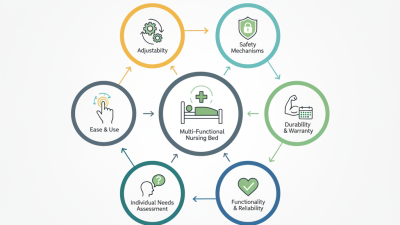
| Manufacturer comparison criteria | Compare verified turning performance, safe working load, safety documentation, warranty, spare-parts availability, training, service coverage, and delivery capability. | These objective criteria are more reliable than ranking suppliers only by advertising language or product photographs. |
Note: Product specifications differ by model and jurisdiction. Clinical staff should assess patient suitability, positioning risks, contraindications, and operating procedures before use.
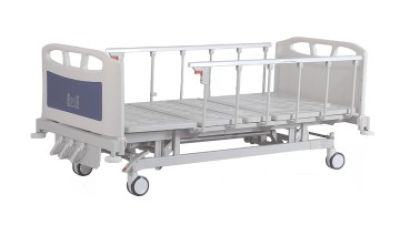
The Manual Three-Crank Hospital Bed HR-S12-1 is designed for wards, clinics, and long-term care environments that need practical positioning without electrical power. Measuring L2050 × W960 mm, with an adjustable height range of 430–700 mm, it can support easier patient access and more efficient caregiver work. Its three manual cranks typically control the backrest, leg-rest, and overall bed height, allowing staff to adjust posture for examination, treatment, meals, and rest. The mechanical design also offers a straightforward solution where maintenance resources or power availability are limited.
Its key benefits include operational reliability, flexible positioning, and potentially lower ownership costs than powered alternatives. Height adjustment can help caregivers work at a more suitable level, while back and leg elevation may improve comfort and assist with routine patient care. The World Health Organization’s Global Patient Safety Action Plan 2021–2030 reports that approximately 1 in 10 patients experience harm during healthcare, with more than half of this harm considered preventable; selecting stable equipment with accessible controls is therefore an important purchasing consideration. Buyers should assess frame strength, caster performance, braking reliability, mattress compatibility, side-rail configuration, cleanability, and the manufacturer’s stated safe working load.
Before ordering, healthcare facilities should confirm whether the 960 mm width suits room layouts and transfer equipment, and whether the 430–700 mm height range matches staff requirements. They should also request documentation for materials, testing, warranty coverage, spare parts, and user training, while verifying that the bed complies with applicable medical-device and hospital-equipment standards in the destination market.
It is an electric care bed that tilts or rotates part of the mattress platform. It helps reposition people with limited mobility. Movement varies by model.
It may support immobile patients, postoperative recovery, rehabilitation, and long-term residential care. A near-upright position can assist feeding and communication. Suitability differs.
Powered movement can reduce repeated lifting, twisting, and awkward reaching. Caregivers can guide repositioning from a steadier standing position. It does not remove every transfer risk.
Look for lockable casters, split safety rails, emergency lowering, and clear controls. Washable surfaces and pressure-relieving support are also useful. Small details matter.
Check patient weight, height, contractures, mobility, and transfer ability. Confirm mattress compatibility, turning angles, rail clearance, battery backup, and room space. Measure the doorway, too.
Check the brakes, mattress fit, rails, and nearby clearance before movement. Watch hinges and rotating sections for possible pinch points. Move slowly. Explain each movement calmly.
No. Staff still need practical training in positioning, communication, and emergency procedures. A frightened patient may move suddenly and create new hazards. Technology helps, but judgment remains necessary.
Inspect motors, casters, brakes, cables, fasteners, and unusual movement regularly. Clean surfaces according to the care facility’s procedures. A loose cable can become a serious problem.
Not always. A spacious ward may suit it better than a narrow bedroom. Check turning space, bedside access, floor condition, and cleaning access. I would test the actual room, not trust a brochure alone.
A Flip Over Nursing Bed is a specialized care solution designed to help caregivers reposition, turn, and support patients with limited mobility. Its adjustable frame, secure side supports, powered movement functions, and pressure-relieving surface can improve comfort while reducing the physical strain associated with manual handling. These beds are useful in hospitals, rehabilitation centers, nursing homes, and home-care environments, especially for patients who require regular repositioning, hygiene assistance, or pressure injury prevention.
This overview examines how Flip Over Nursing Bed systems promote safer patient care by lowering lifting and twisting risks for caregivers. It also compares the specialties of leading manufacturers, including frame durability, motor performance, control systems, sanitation-friendly materials, safety testing, and quality management. When evaluating manufacturers worldwide, buyers should consider product reliability, customization options, after-sales service, certifications, user training, maintenance support, and compatibility with clinical needs. A careful assessment helps healthcare providers select equipment that balances patient dignity, caregiver safety, long-term value, and dependable performance.