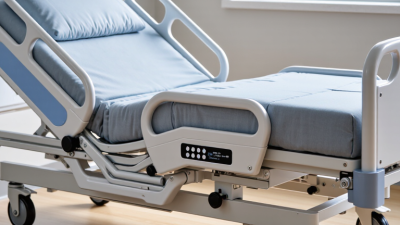
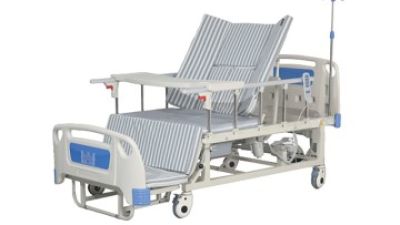
China has turned into a pretty important sourcing hub for hospital and home-care equipment. In this guide, we’ll look at ten Chinese manufacturers tied to the Hand Cranked Nursing Bed market. The focus? Practical manufacturing ability, product consistency, and how reliable their service really is.
A hand-cranked bed might seem simple enough. But that crank handle has to turn smoothly—especially when a caregiver is already worn out. The frame needs to stay steady while you adjust the height or backrest. Then there are all those smaller details: mattress-platform strength, casters, side-rail design, surface coating, and how easy it is to clean. These things shape daily safety and nursing efficiency.
When choosing suppliers, we looked at factory experience, production capacity, quality-control procedures, export records, and customization support. We also considered whether they can give clear specs, inspection documents, spare parts, and responsive after-sales communication. And compliance claims? Check them against what the market currently requires. A certificate by itself doesn’t guarantee dependable performance.
Some suppliers may quote attractive prices but offer limited technical support. Others might have strong engineering but longer lead times. That difference is easy to miss early in negotiations. Buyers should ask for samples, load-testing info, packaging photos, and references from similar healthcare projects. In-person audits are still worth it for larger orders.
Think of this ranking as a useful starting point, not a final verdict. Supplier capabilities can change. Quality can also vary from one model to another—or even between production batches. A careful buyer should verify every important detail before signing a contract. That caution may feel slow, but it helps protect patients, caregivers, and purchasing budgets.

What Is a Hand-Cranked Nursing Bed?
A hand-cranked Nursing Bed is an adjustable care bed operated by turning a manual crank. Its mechanism raises the backrest, knee section, or entire sleeping platform without electricity. The crank usually connects to a gearbox beneath the frame. Turning it slowly changes the patient’s position with controlled movement. This design suits homes, clinics, and facilities facing limited power access. It also reduces dependence on motors and remote controls. Simple does not mean risk-free. A loose crank, weak caster, or poorly fitted side rail can create hazards.
The World Health Organization reported that more than 2.5 billion people needed assistive products in 2022. This figure may reach 3.5 billion by 2050. The report highlights growing demand for practical, safe support equipment. The United Nations also expects one in six people worldwide to be aged 60 or older by 2030. These trends explain interest in a High-Quality Hand Cranked Nursing Bed. Buyers should check load capacity, frame stability, crank resistance, mattress compatibility, and cleaning access. ISO 13485-based quality systems can indicate disciplined medical-device manufacturing, but certification alone proves little about daily performance. In practice, I would test the crank with a weighted mattress and inspect movement from every angle. A bed may look solid. It may still feel awkward during transfers. Conformity records, user instructions, and documented maintenance schedules deserve equal attention.
How China’s Nursing Bed Manufacturing Industry Has Evolved
China Top 10 Hand Cranked Nursing Bed Manufacturers?
China’s nursing bed industry has shifted from basic steel frames toward safer, more adaptable care equipment. The change follows stronger demand from an aging population. China’s National Bureau of Statistics reported 296.97 million people aged 60 and above in 2023, representing 21.1% of the population. This demographic pressure has encouraged manufacturers to improve backrest adjustment, caster stability, side rails, and corrosion-resistant finishes.
The industry is also becoming more standardized. China’s 2024 Health Statistics Yearbook recorded continued growth in hospital and elderly-care resources, increasing demand for beds that support long-term daily use. Market research reports from the China Association for Medical Devices show that medical equipment remains a major manufacturing sector, with domestic production expanding across hospitals, rehabilitation centers, and home care. Export-oriented factories now use modular welding, load testing, and traceable inspections. However, quality still varies.
That weakness matters. A low-cost hand crank may loosen after repeated turns, while a poorly fitted rail can create avoidable risks. Buyers comparing a new bed with a Second Hand Medical Bed should inspect frame fatigue, crank smoothness, mattress-platform alignment, and replacement-part access. Manufacturing has improved, but not every upgrade is meaningful. Some products still look modern without offering better clinical usability. More field feedback from nurses and families is needed.
Criteria for Selecting China’s Top 10 Manufacturers
China Top 10 Hand Cranked Nursing Bed Manufacturers?
Selecting China’s top ten Hand Cranked Nursing Bed manufacturers requires more than comparing export prices. China’s National Bureau of Statistics reported thatpeople aged 60 and above reached 21.1% of the population in 2023. This demographic shift increases demand for safe, durable nursing equipment. A serious evaluation should examine factory experience, production capacity, and documented quality controls. ISO 13485 certification is useful, but it is not enough. Auditors should also review complaint records, corrective actions, and batch traceability.
Product testing must be practical. Inspectors should operate the crank repeatedly, check backrest movement, and measure frame stability under the declared load. Watch the wheels. Test the brakes on a slightly uneven floor. EN 60601-2-52 offers relevant safety guidance for Medical Beds, although hand cranked models still require careful mechanical assessment. TÜV Rheinland’s 2024 medical device industry analysis also highlights stronger demand for risk-based quality management and supply-chain transparency. Paperwork can look perfect. Real performance may disagree.
The best suppliers provide clear drawings, load ratings, corrosion-resistant finishes, and replaceable crank components. They should explain how steel thickness, weld inspection, and mattress-platform gaps are controlled. Buyers should request pre-shipment inspection and sample aging tests. A High-Quality Second Hand Medical Bed still depends on reliable original parts and documented maintenance history. This point is often overlooked. Price remains important, but a cheap bed with loose joints creates higher service costs. The final shortlist should balance verified quality, after-sales response, delivery consistency, and honest technical communication.
China’s Top 10 Hand-Cranked Nursing Bed Manufacturers
China’s Top 10 Hand-Cranked Nursing Bed Manufacturers are often assessed through product safety, production consistency, and clinical practicality.
These suppliers typically produce manual beds with two or three hand cranks, adjustable backrests, leg sections, and lockable castors. A reliable manufacturer should provide clear load ratings, material specifications, inspection records, and user instructions. Factory experience matters because small mechanical faults can affect daily patient care.
During supplier evaluation, inspect the frame welds, crank handles, mattress platform, side rails, and wheel brakes. A smooth crank should not slip under pressure.
Powder-coated steel should resist scratches and routine cleaning. Many buyers also check sample assembly, spare-part availability, packaging strength, and delivery records. Independent quality testing adds credibility, but paperwork should never replace physical inspection. Ask for production photos and a current sample.
A practical comparison should include the ten manufacturers’ customization ability, minimum order quantities, export experience, and after-sales response. Some factories offer strong prices but limited engineering support. Others provide better documentation but longer lead times.
No list is perfect. Even experienced buyers may overlook noise, narrow gaps, or awkward handle positions. Testing a bed with a mattress and simulated patient weight can reveal these issues before purchase. Clear communication remains essential, especially when hospitals require specific dimensions or care procedures.
Key Products and Features Offered by Leading Manufacturers
China’s leading hand-cranked nursing bed manufacturers typically offer two- or three-crank models. These mechanisms adjust the backrest, thigh section, and overall height without electricity. The design suits facilities facing limited power access or strict maintenance budgets. Common features include a steel frame, washable mattress platform, lockable casters, folding side rails, and an IV pole socket.
The WHO and UNICEF Global Report on Assistive Technology (2022) estimates that 2.5 billion people need assistive products worldwide. This figure may reach 3.5 billion by 2050. That pressure makes practical bed design important. For Nursing Bed In Nursing Home use, leading suppliers often provide adjustable back angles, drainage-bag hooks, removable panels, and mattress platforms supporting roughly 180 to 250 kilograms. Some models include a CPR release, but buyers should verify operation during physical testing.
Safety details separate a useful bed from a crowded catalog. Manufacturers should provide load testing, corrosion resistance results, wheel-braking checks, and clear maintenance instructions. Compatibility with EN 60601-2-52 principles is also worth reviewing, even when the bed is manually operated. The weakness is obvious. A low price can hide thin rails or difficult crank movement. Care staff should turn each handle repeatedly and inspect pinch points. Real ward experience matters more than polished photographs. Availability of spare cranks, wheels, and side-rail parts also affects long-term reliability.
How to Compare and Choose the Right Manufacturer
When comparing China’s top hand cranked nursing bed manufacturers, do not judge quality from catalog photos alone. A reliable supplier should provide clear drawings, material specifications, test records, and production details. Ask whether the frame uses reinforced steel, whether the crank operates smoothly, and how the bed performs under repeated loading. Request a sample if the order is important. Small faults become obvious after several turns.
Factory experience matters, but it is not enough. Examine inspection procedures, worker training, traceability, and responses to technical questions. A professional manufacturer should explain mattress-platform dimensions, safe working loads, rail clearance, wheel locks, and surface treatment without vague promises. Check available spare cranks, casters, and fasteners. These parts are easy to overlook. They may later decide whether maintenance is practical.
Compare quotations line by line. Include packaging, inspection, replacement policies, lead time, and after-sales communication. A cheaper offer may exclude testing or use thinner tubing. That is not always visible. Ask for recent customer references in similar healthcare settings, while recognizing that references can be selective. An independent pre-shipment inspection adds useful evidence. I once treated a polished sample as proof of stable production; that assumption was weak. Compare several production batches when possible. Keep written records of every technical commitment. The best choice is usually the manufacturer that explains limitations clearly, not the one making the loudest claims.
Dual-Drive Flashlights and Home Turning Care Beds: Practical Solutions for Safer, More Caring Living
A dual-drive flashlight can be a practical companion in home care, especially when older adults or patients need assistance at night. Its dependable illumination helps caregivers move safely around the bedroom, check a patient’s position, or respond quickly during an unexpected power interruption. Easy handling and reliable use make it useful for bedside care, corridors, and other areas where clear visibility is important.
A home turning care bed provides additional support for people with limited mobility. Equipped with three motors, it can electrically turn the user to the left or right, raise the upper body into a standing or sitting position, and lift the legs. These adjustments reduce the physical effort required from caregivers while helping users find a more comfortable posture. The toilet function is manually switched, allowing daily personal care to be managed with greater convenience.
To help reduce prolonged pressure on one area of the body, the bed offers timed turning options of 30 or 45 minutes. This feature can support regular repositioning and help lower the risk of pressure-related discomfort. If the power fails, the bed’s functions can still be completed through manual operation, including turning and posture adjustment. This backup design helps maintain essential care routines and provides greater peace of mind for both users and caregivers.
FAQS
Review factory experience, production capacity, and documented quality controls. Ask for complaint records, corrective actions, and batch traceability. Paperwork can mislead. Inspect actual production samples before ordering.
Certification shows a quality framework, but it does not prove every bed performs well. Review audit findings, complaint handling, and corrective actions. Test the product physically. A certificate cannot replace practical inspection.
Turn each crank repeatedly and observe smooth backrest movement. Check the thigh section and height adjustment. Measure frame stability under the declared load. Test the brakes on a slightly uneven floor.
Common features include two or three cranks, lockable casters, and folding side rails. Useful details include drainage-bag hooks, removable panels, and an IV pole socket. A washable mattress platform helps daily cleaning. Small details matter.
Many models support approximately 180 to 250 kilograms. Confirm the rating in technical documents. Check the frame, mattress platform, wheels, and side rails together. Do not assume the highest number is safest.
Inspect steel thickness, weld quality, frame joints, and mattress-platform gaps. Watch for loose joints or difficult crank movement. Check rails for bending and possible pinch points. A low price may hide thin materials.
Ask about replacement cranks, wheels, side-rail parts, and brake components. Request clear maintenance instructions and recommended inspection intervals. Confirm response times for service questions. Support quality can vary.
They can be suitable when original parts remain reliable and maintenance history is documented. Inspect corrosion, wheel brakes, crank movement, rails, and welds. Request sample aging or operational testing when possible. Past maintenance may be incomplete.
Conclusion
This guide introduces the Hand Cranked Nursing Bed, explaining its structure, manual adjustment functions, safety features, and practical value in hospitals, nursing homes, and home-care settings. It also reviews how China’s nursing bed manufacturing industry has developed through improvements in materials, production technology, quality control, ergonomic design, and customization. To identify leading manufacturers, the article focuses on criteria such as product reliability, manufacturing capacity, certifications, safety testing, after-sales support, delivery efficiency, and ability to meet different care requirements.
The overview presents China’s top 10 hand-cranked nursing bed manufacturers without focusing on brand names, highlighting the key products and features commonly available, including adjustable back and leg sections, sturdy frames, protective rails, lockable casters, easy-clean surfaces, and optional accessories. It also explains how buyers can compare manufacturers by evaluating product specifications, quality consistency, pricing, customization options, service responsiveness, and long-term value, helping them select a dependable supplier for professional or residential care applications.