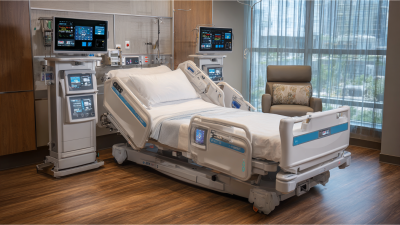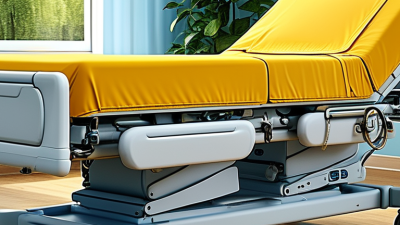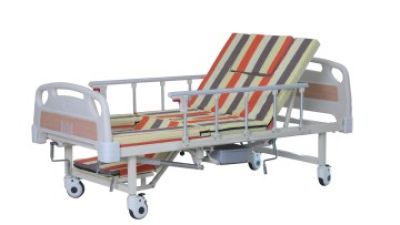
Picking out a multi-functional shift machine in 2026 isn’t just about zooming in on price tags or flipping through colorful brochures. Honestly, you’ve gotta look at real evidence, clinical experiences, and pay close attention to how it’s used day-to-day. Sometimes, those shiny pamphlets can be a bit misleading.
Did you know? According to the World Health Organization’s 2020 report, there’s a huge global nurse shortage — around 5.7 million professionals. They predict that by 2030, we’ll still be short about 4.5 million nurses. That’s a lot of extra work on already overwhelmed staff, which makes having reliable equipment kind of a no-brainer. A good multi-functional nursing shift machine, for example, can really make a difference when it comes to repositioning patients, transfers, hygiene routines, and even preventing pressure injuries. But here’s the thing: “may” is the key word. How well it actually performs depends a lot on staff training, the layout of the room, how mobile the patient is, and how well the machine is maintained.
Audrey Nelson, PhD, RN, FAAN, who’s well-known in the field of patient handling, once said, “There is no such thing as a safe lift.” She’s right—no machine can replace proper risk assessments or the judgment of experienced staff. The goal should be to reduce physical strain for caregivers without sacrificing the patient’s dignity and sense of control.
On top of that, reports from OSHA in the U.S. really stress the importance of having safe patient-handling programs, the right equipment, and proper staff training. When you’re shopping around, make sure to check the machine’s lifting capacity, whether it’s compatible with different slings, and features like emergency lowering, battery life, how easy it is to clean, and overall noise and support. Honestly, it’s a good idea to test the machine out next to an actual bed or in a tight corridor—nothing beats trying it out exactly in the environment where it’ll be used.
And let’s be real—the labels manufacturers slap on these devices aren’t perfect. Different suppliers might describe similar devices differently, so don’t just rely on marketing hype. Instead, focus on comparing the actual functions and specifications documented in the specs. This guide is here to help hospitals, care homes, and rehab centers pick a dependable multi-functional shift machine that makes sense for real clinical situations in 2026.
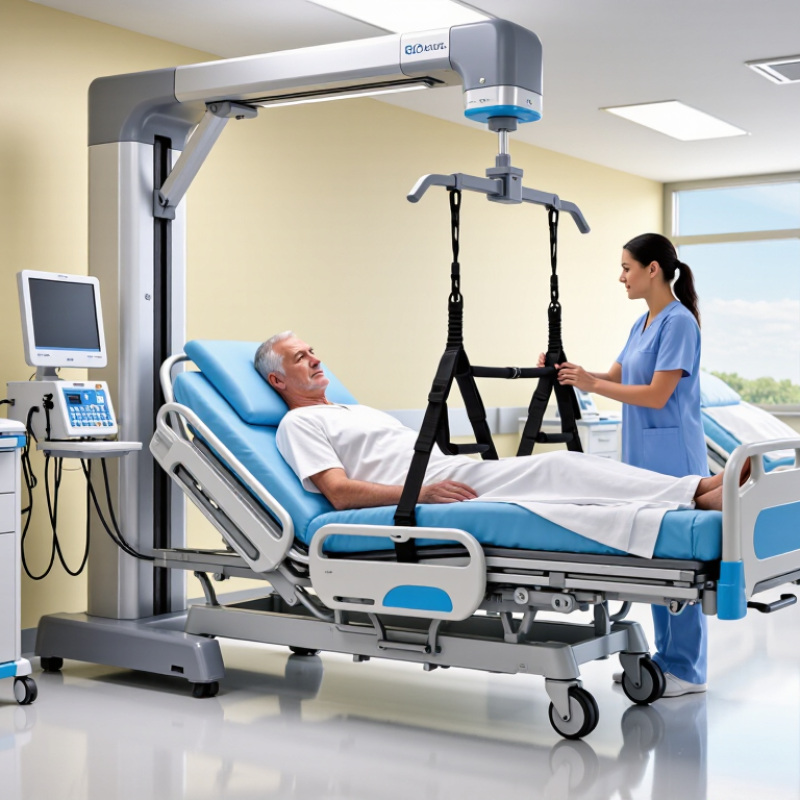
A Multi Functional Shift Machine is equipment designed to move, position, lift, or adjust materials across different work stages. Unlike a single-purpose transfer unit, it may combine horizontal shifting, height adjustment, rotation, and controlled positioning. In a factory, one machine could move a loaded platform sideways, align it with a conveyor, and hold it steady for inspection. The exact meaning is not perfectly standardized. Some suppliers use “shift machine” for material-handling systems, while others describe production-positioning equipment. Buyers should examine the machine’s actual functions, not its title.
Industry data shows why flexibility matters. The International Federation of Robotics reported 541,302 industrial robot installations worldwide in 2023, according to World Robotics 2024. This growth reflects factories seeking faster, repeatable movement between processes. A multifunctional system can reduce manual handling, floor congestion, and repeated setup work. However, more functions can also mean more sensors, controls, maintenance points, and training needs. That trade-off is easy to underestimate.
Tips: Check rated load, stroke length, movement speed, positioning accuracy, safety interlocks, and emergency-stop access. Ask for measured cycle-time data, not only brochure claims. Watch a full demonstration with your own load dimensions. Record noise, vibration, and operator reach during testing. I would also calculate maintenance hours over one year. The cheapest option may become expensive when calibration is frequent. And honestly, “multifunctional” does not always mean better; unused functions can create complexity without improving daily output.
A multifunctional shift machine combines several production tasks in one system, such as cutting, bending, punching, forming, or material positioning. When comparing machines, evaluate the functions you actually need, maximum material thickness, working width, changeover requirements, safety controls, and after-sales support. The chart presents common selection dimensions and their practical importance for a general sheet-metal operation; actual capacity varies by machine configuration and material.
How to Choose a Multi Functional Shift Machine in 2026?
A High-Quality Multi Functional Nursing Shift Machine should solve several daily problems, not merely lift a patient. Key functions include bed-to-chair transfers, repositioning, standing assistance, weighing, and controlled lowering. In a busy ward, a wide base can pass around a bedside table, while smooth casters reduce sudden movement. The machine should also offer adjustable height, clear load indicators, emergency stop controls, and compatible sling options. WHO’s Global Patient Safety Report 2024 states that one in ten patients experiences harm in healthcare, with more than half considered preventable. Safer transfer routines can support that challenge.
Applications differ by patient condition. A mobile lifter may suit routine transfers, while a ceiling-mounted system can reduce floor congestion in compact rooms. Rehabilitation areas may need standing support and repeated assisted movement. Long-term care facilities often value battery endurance, easy cleaning, and simple controls. OSHA identifies patient handling as a major source of healthcare worker strain, and U.S. Bureau of Labor Statistics data consistently place healthcare among sectors with high nonfatal injury rates. The numbers are persuasive, but real ward testing matters more than a brochure. I would test turning space, noise, brake response, and caregiver visibility with actual bedding. No machine is perfect.
Tips: Check the safe working load against real patient needs, including clothing and accessories. Ask for training records, maintenance intervals, and battery replacement costs. Measure doorways before ordering. A technically advanced machine can still fail when the room is too narrow or staff cannot operate it confidently.
In 2026, choosing a multifunctional shift machine requires more than comparing motor power. Assess its specifications as a complete working system. The International Federation of Robotics reported 541,302 industrial robot installations worldwide in 2023. This figure reflects continuing demand for flexible automation. For a shifting, lifting, or positioning machine, record rated load, stroke, positioning repeatability, cycle time, and allowable duty cycle. Ask whether these figures apply under full load. Empty-table testing can hide weaknesses.
Small details matter. Measure energy per completed cycle, not only motor wattage. Check thermal rise after several operating hours. Inspect vibration, noise, emergency stopping, guarding, and control response. The Deloitte 2024 Smart Manufacturing and Operations Survey found that 92% of surveyed manufacturers viewed smart manufacturing as a major competitiveness driver within three years. That makes data access important. Confirm whether the machine exports operating hours, alarms, downtime, and maintenance records. Use availability, performance, and quality to calculate OEE under real production conditions.
Test before purchase. Run the machine for an extended shift with representative loads, repeated direction changes, and normal operators. Record positioning errors over time. Specifications can still mislead. A machine may achieve excellent accuracy briefly, then drift when heat builds. I would also request measured MTBF, repair time, spare-part lead times, and service procedures. These figures are sometimes incomplete, but missing evidence is itself a risk. Ensure the controller supports safe recovery after power loss and complies with applicable machinery safety requirements, including ISO 12100 principles.
Choosing a High-Quality Multi Functional Shift Machine starts with safety, not appearance.
The frame should feel stable during turning, lifting, and repositioning. Wide wheels and responsive brakes matter on smooth floors and near door thresholds. Check the stated weight capacity carefully. Do not treat it as a flexible suggestion.
Look for an emergency stop button, manual lowering, and clear battery warnings. These features help when power fails or a control becomes unresponsive. Adjustable handles should suit different caregivers without forcing bent wrists. A secure harness, rounded edges, and guarded moving parts can reduce slips, pinches, and sudden movement. Controls should be readable at a glance. Small labels can cause big mistakes.
Ease of use also affects safety. The machine should move quietly and fit beside a bed or chair without repeated adjustments. Test the turning radius in a real room, not only in a showroom. Cleaning access matters, especially around joints and harness connections.
I used to overlook floor transitions, but a small raised strip can make a loaded machine jerk unexpectedly. That risk deserves attention.
Ask whether staff can complete basic checks without special tools. Review training instructions, maintenance records, and the procedure for reporting faults. A well-designed machine supports careful work, but it cannot replace patient assessment, correct positioning, or trained supervision.
How to Choose a Multi Functional Shift Machine in 2026?
Choosing a multi functional shift machine starts with its automation level, not its feature count. A useful system should handle repeated adjustments with stable speed and accurate positioning. Look for sensors that detect load changes, tool movement, and abnormal pressure. Automatic recipe storage can reduce setup time between production runs. However, full automation is not always better. Operators still need a clear manual override during unusual tasks.
Controls deserve hands-on testing. The interface should show alarms, operating status, and maintenance reminders without confusing menus. Physical emergency controls must remain easy to reach. Check whether user permissions prevent accidental changes to critical settings. Data logging also matters when investigating defects or inconsistent output. In real workshops, I have found that complicated screens often create avoidable delays. A smaller interface can work better.
Compatibility must be checked before purchase. Confirm voltage, available space, connection points, tooling dimensions, and communication protocols. The machine should fit existing conveyors, sensors, and inspection equipment. Ask for installation drawings and a complete software update policy. Test sample materials under normal and difficult conditions. A machine may perform well in a demonstration, yet struggle with dust, vibration, or frequent product changes. I once underestimated training time on a similar installation. That mistake affected productivity for weeks.
Use this comparison as a practical screening guide for multi-functional shift machines used for indexing, positioning, transferring, or format-changing operations. Values are typical engineering ranges for three machine configurations and should be confirmed against the final application, tooling, material, and safety assessment.
| Evaluation Dimension | Entry-Level Configurable Machine | Integrated Servo-Controlled Machine | Advanced Networked Production Machine |
|---|---|---|---|
| Typical application | Intermittent shifting, simple transfer, low-volume production, and manually assisted changeovers. | Repeated positioning, multi-format production, moderate-to-high throughput, and recipe-based operation. | High-throughput, multi-station production with centralized monitoring, traceability, and automated changeovers. |
| Automation level | Manual loading with pneumatic or motorized shifting; operator starts and verifies each cycle. | Automatic cycle execution with sensors, servo motion, recipe selection, and controlled fault recovery. | Fully integrated operation with automatic loading or feeding, inspection, data collection, and production-line coordination. |
| Typical operating speed | Approximately 10–30 cycles per minute, depending on stroke, load, and operator activity. | Approximately 30–90 cycles per minute for repeatable applications with optimized motion profiles. | Approximately 60–180 cycles per minute when the product, tooling, and upstream/downstream equipment support the required rate. |
| Positioning method | Mechanical stops, pneumatic cylinders, limit switches, or basic induction sensors. | Servo motors with encoder feedback, programmable motion profiles, and electronic position limits. | Multiple coordinated servo axes with synchronized motion, electronic camming, and condition-based adjustments. |
| Typical number of controlled axes | 1–2 axes; suitable for one primary shift movement and one auxiliary adjustment. | 2–6 axes; suitable for coordinated shifting, indexing, height adjustment, and tooling movement. | 6–16 or more axes; suitable for synchronized stations, robotics interfaces, inspection units, and automatic format changes. |
| Typical payload range | Up to approximately 25 kg per moving fixture, subject to acceleration and overhang limits. | Approximately 10–100 kg per moving fixture, depending on the drive, guide system, and travel distance. | Approximately 25–250 kg per moving fixture, with higher values requiring application-specific mechanical design. |
| Positioning repeatability | Typically ±0.5–1.0 mm with mechanical stops or basic pneumatic control. | Typically ±0.05–0.20 mm with servo feedback, rigid tooling, and a properly tuned motion system. | Typically ±0.02–0.10 mm in precision applications, provided thermal, mechanical, and measurement conditions are controlled. |
| Changeover method | Manual adjustment using scales, handwheels, pins, or replaceable fixtures. | Recipe-driven settings with motorized adjustment for selected dimensions and guided operator prompts. | Automatic format changeover using servo positioning, product recipes, electronic verification, and tool identification. |
| Controller architecture | Relay logic, compact PLC, or standalone motion controller with limited data handling. | PLC with integrated motion control, HMI recipes, alarm history, and structured parameter management. | Industrial PC or high-capacity PLC with motion, safety, inspection, historian, and production-management integration. |
| Operator interface | Push buttons, selector switches, indicator lights, or a small basic display. | Color HMI, role-based access, recipe management, trend displays, maintenance screens, and diagnostic alarms. | Multi-level HMI and supervisory interface with electronic records, remote diagnostics, line dashboards, and production analytics. |
| Common industrial communication | Discrete I/O, 24 VDC signals, and basic serial communication. | Ethernet-based PLC communication, with support for widely used industrial protocols depending on the controller. | Industrial Ethernet, real-time motion networks, OPC UA or equivalent data interfaces, and integration with manufacturing systems. |
| Compatibility with existing lines | Best for standalone use or simple lines with dry-contact and 24 VDC handshakes. | Suitable for lines requiring PLC coordination, encoder signals, recipe exchange, and synchronized start/stop control. | Suitable for networked lines requiring real-time synchronization, production data exchange, remote service, and traceability. |
| Electrical requirements | Commonly 110–240 VAC control power with 24 VDC sensors; motor power varies by load. | Commonly three-phase AC input for servo drives, plus 24 VDC control circuits and protected auxiliary supplies. | Three-phase AC power, dedicated control power, network infrastructure, safety circuits, and possible UPS support for data systems. |
| Pneumatic requirements | Often required; typical plant air supply is approximately 5–7 bar, subject to cylinder and valve specifications. | May use pneumatic clamping or tooling; typical operating pressure remains approximately 5–7 bar. | May require higher air volume for multiple actuators, blow-off, gripping, and automated tooling; filtration and pressure monitoring are recommended. |
| Safety functions | Emergency stop, fixed guarding, limit switches, and basic interlock protection. | Guard interlocks, safety relays or safety PLC, monitored stop, overload detection, and reset-controlled restart. | Safety PLC, coded guard switches, safe torque off, safety-rated motion monitoring, light curtains, and zone-based risk control where required. |
| Data and traceability | Cycle counter and basic fault indication; limited historical data. | Alarm history, recipe records, cycle statistics, downtime tracking, and optional quality data capture. | Part or batch traceability, timestamped process data, electronic records, maintenance history, and integration with supervisory systems. |
| Maintenance profile | Simple mechanical and pneumatic maintenance; low software complexity. | Requires servo tuning, sensor calibration, parameter backup, lubrication, and periodic inspection of guides and belts. | Requires controls expertise, network maintenance, cybersecurity procedures, motion-system inspection, and documented software version control. |
| Estimated changeover time | Approximately 15–60 minutes, depending on the number of manual adjustments and tooling changes. | Approximately 5–20 minutes when recipes and motorized adjustments are properly configured. | Approximately 1–10 minutes for compatible formats with automatic positioning and verified tooling. |
| Best compatibility check before purchase | Confirm mounting dimensions, voltage, air connections, sensor types, and available I/O points. | Confirm PLC platform, encoder requirements, motion-bus compatibility, HMI data exchange, and safety interface. | Confirm network architecture, time synchronization, cybersecurity rules, MES or SCADA interfaces, data ownership, and remote-access policy. |
| Main advantage | Lower initial complexity, easier operator training, and straightforward maintenance. | Good balance of flexibility, repeatability, throughput, and integration capability. | Highest flexibility, strongest line integration, detailed data visibility, and reduced manual intervention. |
| Main limitation | More operator involvement and limited scalability for frequent format changes or high production rates. | Higher commissioning effort and greater dependence on correct software, servo sizing, and system tuning. | Highest acquisition and integration cost, greater training requirements, and more demanding cybersecurity and maintenance controls. |
| Recommended selection condition | Choose when the process is stable, product variety is low, and manual changeover is acceptable. | Choose when several formats, repeatable positioning, and reliable PLC-level integration are required. | Choose when the machine must operate as part of a connected, traceable, highly automated production system. |
Selection note: Actual performance depends on product geometry, fixture mass, stroke length, acceleration, cycle timing, environmental conditions, tooling stiffness, control architecture, and applicable machinery-safety requirements. Request a cycle-time test, interface list, electrical schematic, pneumatic diagram, risk-assessment information, and a documented compatibility matrix before final approval.
Purchase price is only the visible cost. A multi-functional shift machine may also require tooling, operator training, software updates, energy, and spare parts. The U.S. Department of Energy reports that motor-driven systems use about 70% of industrial electricity. Therefore, compare energy consumption per production cycle, not only the machine’s rated power. Ask for measured data under realistic loads. A brochure rarely shows that detail.
Maintenance deserves equal attention. The U.S. Department of Energy’s Operations and Maintenance Best Practices guide estimates that preventive maintenance can reduce costs by 12–18% compared with reactive maintenance. Check access to filters, lubrication points, sensors, and control cabinets. A technician should reach common service parts without dismantling half the machine. That small detail can save hours during a night shift.
Predictive maintenance may also improve planning. Deloitte’s analysis indicates potential downtime reductions of 30% and maintenance-cost reductions of 20–25%, depending on equipment and data quality. Treat these figures carefully. Sensors do not repair machines. They only reveal patterns.
My own review mistake would be trusting a perfect payback spreadsheet while ignoring cleaning time and local labor rates. Request a five-year total-cost model, including downtime, calibration, consumables, and emergency repairs. A cheaper machine can become expensive quickly.
Choosing a multi functional shift machine starts with the patient, not the product brochure. Observe daily transfers, room layouts, doorway widths, and caregiver routines. A machine may lift safely but still fail in a crowded bedroom. Measure turning space beside the bed. Check the patient’s weight, mobility, posture, and need for support. Also consider whether one caregiver can operate it without awkward reaching.
Ask a Multi Functional Nursing Shift Machine Manufacturer for verified load ratings, emergency lowering features, battery performance, sling options, and maintenance records. Request clear training materials and demonstrations with realistic conditions, such as a narrow bathroom entrance or uneven flooring.
Infection-control details matter too. Smooth surfaces and removable components can simplify cleaning. A powerful machine can still be the wrong choice. I have seen equipment selected for capacity, while staff struggled with controls and storage. That decision needs reflection.
Tips: Compare the machine with your busiest shift, not an ideal scenario. Test the turning radius with a bed and wheelchair present. Confirm charging time and backup procedures. Check warranty terms, inspection schedules, and local service access. Let nurses and caregivers test the controls. Their feedback may reveal small problems, such as a noisy alarm or a sling that takes too long to fit. Also record rejected options and explain why; this makes future purchasing more reliable.
As global ageing data points to a steady rise in the older population, families and care providers are seeking practical solutions that support safe, comfortable living at home. The homecare market is increasingly moving toward multifunctional equipment that can assist with daily nursing tasks while reducing the physical demands placed on caregivers. A multi-functional turning Nursing Bed responds to this need by combining flexible positioning, supportive design, and dependable construction for long-term residential care.
Its frame uses sturdy 40 × 60 mm square tubes with a 1.0 mm thickness, while the bed platform is welded from 0.8 mm C-shaped plates to provide strength and a consistently level surface. Connectors made from thick-walled pipes of at least 2.75 mm or 3 mm stamped cold plates reinforce the bed body. Robotic full welding creates smooth, reliable joints and enhances overall durability. Before finishing, steel-shot sandblasting removes rust and surface impurities. Electrostatic powder coating then adds resistance to acid, alkali, corrosion, and fading, helping the bed maintain its appearance and performance in demanding homecare environments.
Record rated load, movement range, positioning repeatability, cycle time, and duty limits. Confirm these values under full load. Test it loaded. Empty-table results can hide weaknesses.
Run the machine through an extended shift with representative loads. Include repeated direction changes and normal operators. Record positioning errors as heat builds. Short demonstrations are not enough.
Measure energy used per completed cycle, not only motor wattage. Check temperature rise after several operating hours. Request operating hours, alarms, downtime, and maintenance records. Missing data deserves caution.
Look for emergency stopping, manual lowering, clear battery warnings, and guarded moving parts. A secure harness and rounded edges can reduce injury risks. Small labels matter. Controls should be readable immediately.
Test the turning radius beside a real bed, chair, or workstation. Check movement across door thresholds and raised floor strips. Adjustable handles should prevent bent wrists. Staff should complete basic checks without special tools.
Not always. Sensors, automatic settings, and stored recipes can reduce repeated setup work. Operators still need a clear manual override. Complicated screens may create avoidable delays.
Check voltage, available space, connection points, tooling dimensions, and communication protocols. Confirm compatibility with existing conveyors, sensors, and inspection equipment. Request installation drawings and software update details.
Ask for measured mean time between failures, repair time, spare-part lead times, and service procedures. These figures may be incomplete. That is a warning sign. Plan for power-loss recovery and safe restart procedures.
Calculate availability, performance, and quality under real operating conditions. Review the combined result as OEE. Do not rely on one impressive accuracy reading. Accuracy may drift after heat accumulates.
Choosing the right Multi Functional Shift Machine in 2026 requires a clear understanding of how the equipment works, what tasks it can perform, and where it will be used. These machines are designed to support multiple shifting, handling, or adjustment operations, helping improve productivity and reduce manual effort. Buyers should assess specifications such as capacity, operating speed, precision, durability, energy use, and overall performance to ensure the machine matches practical production requirements.
Safety and ease of use are equally important. Look for protective features, accessible controls, emergency stopping systems, ergonomic design, and reliable monitoring functions. Automation options, control interfaces, software compatibility, and integration with existing equipment should also be reviewed carefully. In addition, compare the purchase price with installation, maintenance, training, spare parts, and long-term operating costs. The best choice is a Multi Functional Shift Machine that balances performance, flexibility, safety, compatibility, and total ownership value for the user’s specific application.