Leave Your Message
0%

Picking out the right Home Care Bed isn’t just about comparing prices or counting how many adjustable features a bed has. It’s a lot more personal—think about how it impacts sleep, ease of transfers, skin protection, breathing comfort, and safety for caregivers every single day. Sometimes, a bed that looks super impressive in the showroom might feel totally out of place next to a narrow bedroom wall—that detail really does matter!

Dr. Bill Thomas, who’s a geriatrician and started The Green House Project, once said, “The environment is a critical part of care.” Honestly, I think that’s spot on here. A bed isn’t just some furniture; it’s part of the whole care environment. When choosing, it helps to keep in mind the person’s mobility, height, weight, pain levels, risk of falling, and how they might recover after surgery or illness. Features like a firm mattress, adjustable height, sturdy side supports, and surfaces that are easy to clean can really make day-to-day routines a lot less exhausting. But remember—no matter how many features a bed has, it’s always a good idea to get a professional assessment.

It’s worth paying close attention to beds from well-known brands like Invacare, Drive DeVilbiss Healthcare, or Arjo. Check things like load capacity, whether it can lower in emergencies, how easy it is to lock the casters, mattress compatibility, warranty details, and how easily you can get service when needed. Don't forget to measure whether the bed will fit through your doorways, and definitely take measurements of the room before ordering. Sounds simple, but trust me, this mistake happens more often than you'd think.

Also, caregivers should try out the controls with the person using the bed present. Can they understand how to operate it? Can a family member reposition the bed without pulling something or straining? Sometimes, the most advanced-looking model isn’t the best option. It might actually be smarter to go with a simple, reliable design. Keep in mind that needs can change—after surgery, a fall, or if strength diminishes, so it’s good to re-evaluate your choice regularly. Today’s perfect bed might not work so well down the line, so staying flexible is key.
How to Choose the Best Home Care Bed for Elderly Care?

Understanding the Different Types of Home Care Beds

How to Choose the Best Home Care Bed for Elderly Care?

Understanding bed types is more useful than choosing by appearance.A standard adjustable Home Care Bed raises the back and knees, helping with meals, breathing, and transfers. A low bed reduces injury risk during a fall. However, it may make standing harder for someone with weak legs. A height-adjustable model supports safer caregiver work and easier wheelchair transfers.

Pressure-redistribution beds use specialized mattresses and adjustable support surfaces. They suit older adults with limited mobility or a higher risk of pressure injuries. Bariatric beds provide wider frames and stronger weight capacity. Check the user’s weight, turning space, room width, and caregiver access.

The World Health Organization reports that one in six people worldwide will be aged 60 or older by 2030 (WHO, Ageing and Health, 2022).

Falls matter. The Centers for Disease Control and Prevention reports that more than one in four adults aged 65 and older falls each year (CDC, Important Facts About Falls, 2024).

Side rails are not automatically safer; they can restrict movement or encourage unsafe climbing.

A qualified clinician should assess fall history, transfers, skin condition, and nighttime toileting needs. Measure the room first. A perfect bed can become a poor choice when its controls are confusing or the mattress feels too firm.

Reassess after one week. Preferences often change.

Assessing the Elderly User’s Medical and Personal Needs

Choosing a Home Care Bed For Elderly care begins with the person, not the furniture. Ask what movements are difficult. Can they sit, turn, or stand without help? A physiotherapist or nurse can assess transfer ability, fall risk, posture, and skin condition. Someone with weak hips may need adjustable height. A person with reflux or breathing problems may need a reliable backrest adjustment. Pressure-relieving support may be important for users who spend many hours in bed.

Medical needs are only one part of the decision. Measure the bedroom, doorway, and bathroom route before ordering. Check whether a caregiver can reach both sides of the bed. Consider the user’s height, weight, sleeping habits, and comfort preferences. Some people dislike rails because they feel trapped. Others need them for repositioning. Rails are not automatically safe, especially for users with confusion or poor judgment. A clinical professional should review their use.

Tips: Write down daily routines for three days. Note transfers, night waking, pain, and caregiver assistance. Test the handset with the user. Make sure buttons are clear and reachable. Check the mattress fit and cleaning requirements. I have seen families focus on advanced functions while overlooking a narrow doorway. That mistake is easy to prevent. Reassess the bed after several weeks, because needs can change quickly.

Comparing Essential Bed Features and Safety Functions

How to Choose the Best Home Care Bed for Elderly Care?

A suitable home care bed should support safe movement, not simply provide a comfortable mattress. The World Health Organization reports that falls cause about 684,000 deaths worldwide each year, with adults over 60 facing the greatest risk. The CDC also estimates that more than three million older adults receive emergency treatment for falls annually in the United States. These figures make bed height and stability important decisions. Choose adjustable height, secure locking casters, and a backrest that supports sitting during meals. Knee elevation may reduce sliding and improve comfort. Small details matter.

Safety functions need careful comparison. Split side rails can assist repositioning, but they may also create entrapment risks when poorly fitted. The FDA’s A Guide to Bed Safety recommends checking rail gaps, mattress fit, and the user’s ability to exit safely. A low-height setting, emergency manual lowering, and clearly visible controls add practical protection during power failure. Confirm the safe working load, including the person, mattress, and bedding. Cleanable surfaces also help home caregivers maintain hygiene. I would not choose a bed by its motor count alone. That sounds impressive, but it can distract from daily usability. A qualified nurse or occupational therapist should assess mobility, cognition, and transfer needs before purchase. No checklist is perfect. Real homes have narrow doors, uneven floors, and rushed caregivers. These conditions can change which bed is genuinely safest.

Choosing the Right Bed Size, Height, and Adjustability

Choosing an Electric Home Care Bed starts with the room, the user’s body, and daily care routines. Measure doorways, floor space, and caregiver access before ordering. A 90–105 cm bed width usually supports turning without consuming the entire room. Still, wider is not always better in a small bedroom.

Height affects safety. The CDC reports that over three million older adults receive emergency treatment for fall injuries each year in the United States. Set the bed low for transfers, with both feet flat and knees close to a right angle. Raise it to waist level during bathing or dressing, reducing repeated bending for caregivers. The safest height may change between morning and night.

Adjustable back and knee sections can ease breathing, eating, swelling, and repositioning. WHO’s Global Report on Assistive Technology estimates that more than 2.5 billion people need assistive products worldwide. That need is growing. Choose controls with large symbols and tactile buttons. Test them while wearing glasses or gloves. Small details matter.

Check mattress dimensions carefully. A poor fit can create gaps. Side rails also require clinical judgment because they may increase entrapment risks. I would not treat every adjustment as automatically helpful. Ask a physiotherapist or occupational therapist to assess transfers, pressure relief, and caregiver technique. Recheck the setup after several days; real homes rarely behave like showrooms.

How to Choose the Best Home Care Bed for Elderly Care? - Choosing the Right Bed Size, Height, and Adjustability

Selection Dimension Typical Option Common Specification Best Suited For Practical Selection Guidance
Bed Width Standard single width Approximately 90–105 cm (35–41 in) Most older adults who sleep independently and have adequate mobility
Bed Width Wider single width Approximately 105–120 cm (41–47 in) Taller or larger-bodied users, people who move frequently during sleep, or users requiring additional turning space Measure doorways, hallways, and the available space beside the bed before choosing a wider frame.
Bed Length Standard length Approximately 200–210 cm (79–83 in) Most adults of average height
Bed Length Extended length Approximately 215–225 cm (85–89 in) Taller users or people who need extra legroom Choose an extended frame only after checking bedroom dimensions, transport access, and compatible mattress availability.
Overall Bed Height Low-height setting Often approximately 25–40 cm (10–16 in) from floor to mattress platform Users at higher risk of injury from a bed exit or those who benefit from a lower transfer height The lowest setting may reduce fall-related injury risk but can make standing more difficult. Use according to the individual’s transfer ability and care plan.
Overall Bed Height Mid-range setting Often approximately 40–60 cm (16–24 in) from floor to mattress platform Routine nursing, dressing, repositioning, and caregiver assistance
Overall Bed Height High working setting Often approximately 60–80 cm (24–31 in) from floor to mattress platform Short-term caregiving tasks that require reduced bending Lower the bed before the user gets in or out. Do not use a raised working height as the normal sleeping position unless clinically appropriate.
Backrest Adjustment Manual or electric backrest Common adjustment range: flat to approximately 60–70° Users who read, eat, communicate, or need support for upper-body positioning Electric adjustment is generally easier for users with limited hand strength; confirm that the control is simple and accessible.
Leg Rest Adjustment Knee-break or leg elevation Adjustable knee section, often combined with backrest movement Users who need more comfortable seated positioning or temporary leg elevation Check that the leg section supports the user without creating pressure behind the knees or allowing the heels to rest against hard surfaces.
Mattress Platform Three-section platform Backrest, seat/knee, and leg sections Basic positioning needs and general home care
Mattress Platform Four-section platform Backrest, thigh, lower-leg, and foot sections Users needing more detailed leg and foot positioning Choose this configuration when the added adjustment range is genuinely useful; more moving parts require careful setup and maintenance.
Control Method Electric handset Usually controls height, backrest, and leg sections Users or caregivers who need frequent position changes
Control Method Manual adjustment Crank or assisted mechanical adjustment Occasional adjustment or homes where electrical simplicity is preferred Confirm that the caregiver can operate the mechanism safely and that the crank does not obstruct walking space.
Safe Working Load Standard capacity Commonly around 135–180 kg (300–400 lb), including the user, mattress, bedding, and accessories Most standard home-care applications Never estimate capacity from user weight alone. Add the mattress, rails, lifting pole, and other equipment, then stay within the manufacturer’s stated limit.
Side Rails Full-length or split rails Different rail lengths and height positions are available Users needing assistance with repositioning or a visual boundary Side rails are not automatically a fall-prevention solution. Check for entrapment hazards and follow professional assessment and safety guidance.
Clearance and Access Caregiver access around the bed Space varies by room layout and care tasks Homes requiring transfers, bathing assistance, or wheelchair access
Mattress Compatibility Pressure-redistributing mattress Must match the platform dimensions and adjustment profile Users spending extended periods in bed or with elevated pressure-injury risk Use a compatible mattress thickness and type. A mattress that is too thick can reduce side-rail protection and alter the effective bed height.
Mobility and Transfers Adjustable transfer height Height set near the user’s safe sit-to-stand position Users transferring from a wheelchair, walker, or standing position
Power and Emergency Use Battery backup or manual override Availability depends on the bed design Homes affected by power interruptions or users dependent on powered positioning Check backup duration, charging requirements, cord placement, and how to return the bed to a safe position during an outage.

Important: Dimensions and load ranges are common industry examples rather than universal specifications. Always verify the exact bed, mattress, accessory compatibility, safe working load, and applicable safety requirements before purchase or use.

Evaluating Mattress Compatibility and Pressure Relief

Choosing the best home care bed begins with the mattress, not the frame. A Serenity Home Care Bed should support a compatible mattress with the correct dimensions, weight capacity, and flexibility. Measure the sleeping surface carefully. A poor fit can create gaps, sliding, or uneven support.

Pressure relief requires more than soft foam. High-density foam can distribute weight, while alternating-air systems may suit people with limited movement. However, air settings need regular checks. Too much firmness can increase pressure around the hips and heels. Too little support may affect posture. Small details matter.

Check the mattress against the bed’s backrest and leg elevation. It should bend without folding sharply. Look for breathable covers, moisture resistance, and easy cleaning. Caregivers should inspect the skin daily, especially near bony areas, and change positions according to professional guidance. Measure twice.

No mattress prevents every pressure injury. Individual needs change with weight, mobility, sweating, and medical conditions. A nurse, occupational therapist, or qualified supplier can help assess risk and compatibility. Read the care instructions closely. Real homes are rarely perfect, and a mattress that works well initially may need adjustment later.

Checking Room Layout, Caregiver Access, and Installation Needs

Choosing a High-Quality Home Care Bed begins with the room, not the product catalogue. Measure the doorway, turning area, and clearance beside the bed. A bed that fits the mattress may still block a wheelchair or lifting equipment. Leave space for a caregiver to stand on both sides, especially near the head section. Small rooms often expose the problem late.

The Centers for Disease Control and Prevention reports that more than one in four adults aged 65 and older falls each year. Falls also lead to about three million emergency department visits annually in the United States (CDC, 2024). This makes clear floor access essential. Remove loose rugs, route cables away from walking paths, and keep the call device within reach. A bright lamp near the entrance helps during night care. Simple details matter.

Installation deserves the same attention as room planning. Check the floor strength, electrical outlet position, and emergency lowering procedure. Caregivers should practice raising the backrest and locking the wheels before daily use. The World Health Organization identifies falls as a major source of injury among older adults (WHO, 2021). Still, a bed cannot solve every hazard. My checklist might miss a narrow hallway or a family member’s limited strength. Ask an occupational therapist or qualified installer to inspect the setup in real conditions, with the resident and caregiver present.

Use this practical screening model before choosing a home care bed. Room layout confirms that the bed can fit safely with enough circulation space, caregiver access supports transfers and daily care, and installation needs cover delivery, assembly, power, and future repositioning. A higher score indicates greater planning priority.

Quality Electric Five-Function Hospital Beds: Comfort & Reliability—Insights from Grand View Research and Fortune Business Insights

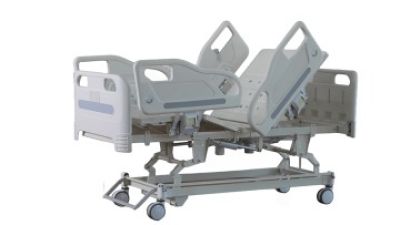
Quality electric five-function hospital beds are designed to combine patient comfort with dependable clinical performance. Using advanced electric technology, the bed allows caregivers to make precise adjustments with minimal effort. Its height can be raised or lowered to support safer nursing and transfer tasks, while the adjustable backrest and leg sections help patients find a suitable posture for rest, examination, or daily care. Additional positioning functions can improve flexibility in different treatment and recovery settings.

Comfort is supported by an ergonomic structure that distributes pressure more evenly across the body. Patients who remain in bed for extended periods can benefit from stable support and personalized positioning, helping reduce discomfort caused by prolonged immobility. At the same time, a reliable electric control system enables smooth, consistent movement, which can improve workflow for nursing staff and create a more responsive care environment. From a quality and market-development perspective, these features reflect the growing demand for hospital beds that balance practical functionality, user-centered design, and long-term reliability.

FAQS

What type of home care bed may suit an older adult with limited mobility?

An adjustable bed can raise the back and knees. This may support eating, breathing, and transfers. A low bed can reduce fall height. However, standing may become harder for someone with weak legs.

When is a pressure-redistribution bed worth considering?

Consider one when mobility is limited or pressure injury risk is higher. Specialized mattresses spread body pressure more evenly. Check skin condition regularly. Comfort can change after several days.

How should I choose the correct bed width?

Measure the user’s body, room width, and turning space. A width of 90–105 centimeters often allows repositioning. Wider is not always better. Small rooms need walking and caregiver space.

Why does bed height matter during daily care?

Lower the bed during transfers, with both feet flat on the floor. Raise it near waist level during dressing or bathing. This can reduce caregiver bending. The safest height changes between morning and night.

What room measurements should be checked before installation?

Measure doorways, floor space, and clearance beside the bed. Check wheelchair turning areas and equipment access. A bed may fit the mattress but block movement. Hallways can surprise you.

Are side rails always safer?

No. Side rails may restrict movement or encourage unsafe climbing. They can also create entrapment concerns. A qualified clinician should assess the person’s movement and fall history.

What features make bed controls easier to use?

Choose large symbols and tactile buttons. Test the controls while wearing glasses or gloves. Keep the call device within reach. Tiny buttons can become a real problem.

What should caregivers check after installation?

Practice raising the backrest and locking the wheels. Check the outlet, floor strength, and emergency lowering procedure. Remove loose rugs and route cables away from walking paths. I might overlook a narrow hallway, so an in-home assessment is wiser.

Conclusion

Choosing the best Home Care Bed For Elderly care begins with understanding the available bed types and matching them to the user’s medical condition, mobility, comfort preferences, and daily care requirements. Consider whether the user needs adjustable back and leg sections, a height-adjustable frame, side rails, or other safety functions that can support repositioning and reduce fall risks. The bed should also be easy for caregivers to operate while allowing the elderly person to maintain as much independence as possible.

Size, height, and adjustability are equally important for comfort and safe caregiving. Make sure the bed fits the user’s body comfortably and provides enough space for movement without overcrowding the room. Check mattress compatibility, firmness, ventilation, and pressure-relief properties, especially if the user spends extended periods in bed. Finally, review the room layout, access for caregivers, power requirements, delivery route, and installation needs to ensure the bed can be used safely and conveniently at home.

Liam

Liam

Liam is a dedicated marketing professional at Hebei Huarin Co., Ltd., where he leverages his extensive knowledge to elevate the company’s brand presence. With a strong background in product marketing, Liam specializes in crafting engaging and informative content that highlights the superior quality......
Previous 7 Best Elevating Nursing Beds for Global Buyers?