
Leave Your Message
0%

You might have noticed that China's top suppliers of Multi Functional Nursing Beds are really starting to attract attention these days. Why? Well, it’s all tied to the aging population changing up how healthcare is bought and provided. The World Health Organization says that by 2030, one out of every six people around the world will be 60 or older. And come 2050, that number is expected to hit around 2.1 billion. Crazy, right? All these numbers mean there’s a growing need for safe, adjustable beds—whether in hospitals, rehab centers, or even at home.

Now, if you’re looking for a good supplier, don’t just go for the cheapest option you find online. It’s important to check things like how high the bed can lift, the angles of the backrest, knee articulation, how well the wheels lock, and how the side rails are designed. And don’t forget about mattress compatibility and how easy it is to clean. The WHO’s Global Report on Assistive Technology points out that over 2.5 billion people today need some kind of assistive device. So, while a multi-functional Nursing Bed can really make a difference—think safer transfers, easier repositioning, and helping caregivers get their work done—it really depends on the design being suited for the folks actually using it.

And, honestly, pressure management is a huge deal too. Professor Amit Gefen, a well-known expert on pressure injuries from Tel Aviv University, calls pressure ulcers “a major clinical issue.” His research emphasizes how important it is to look at contact pressure, posture, and tissue protection when choosing equipment. That kind of insight helps buyers see beyond pretty catalog photos and really get to know what they’re investing in.

Of course, suppliers like Joerns Healthcare, Savion Industries, and reputable Chinese OEMs each bring their own strengths to the table. But remember—certifications, clinical testing, warranty support, and spare parts availability are what really matter, not just a fancy brochure. Even seasoned buyers can sometimes overlook details like how loud the bed is, how cables are routed, or whether staff gets proper training. This guide is designed to help you spot a trustworthy provider by focusing on real evidence, hands-on testing, and open, honest communication.

China Top Multi Functional Nursing Bed Supplier?

Definition and Role of a Multifunctional Nursing Bed

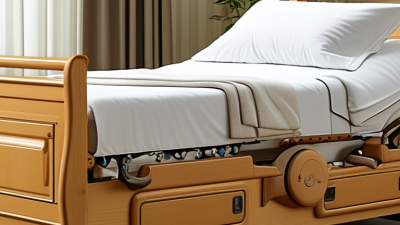
A multifunctional nursing bed combines adjustable height, backrest, leg elevation, side rails, and controlled repositioning. It supports daily care when patients have limited mobility, post-surgical weakness, or long recovery periods. In practical use, a caregiver can raise the backrest for meals, lower the bed for safer transfers, and adjust leg support to reduce sliding.

Its role extends beyond comfort. Proper positioning can help with breathing, feeding, wound observation, and pressure management. The WHO Global Report on Assistive Technology states that more than 2.5 billion people need at least one assistive product worldwide. That figure may reach 3.5 billion by 2050. These numbers show why safe home-care equipment matters.

A High-Quality Multi Functional Nursing Bed should offer stable movement, clear controls, washable surfaces, and reliable emergency lowering. Experience matters here. A quiet motor is useful at night, but easy cleaning may matter more in daily care. The bed should also match room size, patient weight, caregiver strength, and transfer habits. More functions are not always better. I would question any design that adds complexity without improving safety. The WHO also identifies falls as a major health concern among older adults, so low-height positioning and secure side protection deserve careful evaluation. Standards help, but real bedside testing remains essential. Small gaps, awkward handles, or confusing controls can create problems. That detail is easy to miss.

Key Features of Modern Nursing Beds

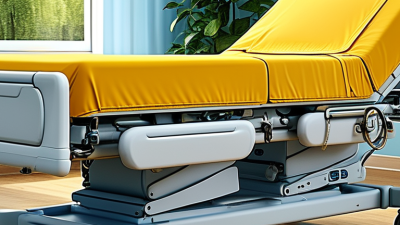
Modern nursing beds are designed around daily care, not decoration. Adjustable back and knee sections help users sit for meals, reading, or conversations. A height-adjustable frame lets caregivers work with less bending. This matters during transfers. Small details matter. Smooth casters, secure brakes, and quiet motors support safer room routines. A washable mattress platform can also reduce cleaning time after spills.

As a Multi Functional Nursing Bed Manufacturer, a supplier should explain load limits, adjustment cycles, and maintenance needs clearly. Independent testing records are useful, but they should match the delivered model. Side rails need firm locking and simple release controls. They should not create avoidable gaps or trapping points. Battery backup can help during short power interruptions. Yet, battery life varies with weight, movement, and charging habits. Buyers should verify it in realistic conditions.

Hands-on evaluation often reveals what brochures miss. Does the handset feel clear for an older user? Can a caregiver reach the brake without stepping around the frame? Is the lowest position low enough for safer entry? These questions deserve practical answers.

No bed solves every care challenge. A tall user may need different dimensions, while a small room may limit turning space. Even excellent features can become inconvenient when staff training is rushed or cleaning instructions are vague.

Ask for manuals, service contacts, and replacement-part availability before installation.

Main Types of Multifunctional Nursing Beds in China

China’s ageing population is increasing demand for safer home and institutional care. The National Bureau of Statistics reported 296.97 million Chinese residents aged 60 or above in 2023. That represented 21.1% of the population. The China Statistical Yearbook 2024 also recorded continuing growth in medical and elderly-care resources.

Main Types of Multifunctional Nursing Beds in China

The commonest type is the two-function electric bed. Its backrest and leg section adjust separately, helping users sit up, eat, or reduce pressure on the lower back. Three-function models add height adjustment. This supports safer transfers beside a wheelchair. Five-function beds usually include back, leg, height, tilt, and side-rail controls. They suit long-term care facilities and patients requiring frequent repositioning. Manual versions remain practical where budgets or power access are limited.

Home-care beds often use compact frames, locking casters, removable boards, and waterproof mattresses. Institutional beds usually emphasize stronger load capacity, washable surfaces, and nurse-controlled handsets. Multi Functional Nursing Bed Manufacturers should also consider IEC 60601-2-52 safety requirements, even when products target non-hospital settings. Small details matter. A noisy motor can disturb sleep. A poorly placed brake can delay transfers. Care is personal.

The World Health Organization’s Global Report on Assistive Technology estimates that more than 2.5 billion people need assistive products worldwide. Yet bed selection is not only a market decision. Families should check mattress compatibility, emergency lowering, rail gaps, and after-sales maintenance. Some specifications look impressive but feel awkward in daily use. Testing with real caregivers remains essential.

How to Evaluate a Chinese Nursing Bed Supplier

China’s ageing population makes supplier evaluation more important than product appearance. China Statistical Yearbook 2024 records 216.76 million people aged 65 or above in 2023, representing 15.4% of the population. The World Health Organization’s World Report on Ageing and Health also stresses safe, person-centred care. A nursing bed supplier should understand both needs.

Request factory evidence, not only catalogue photos.Check whether the bed follows IEC 60601-2-52 requirements for Medical Beds. Review load-test records, electrical safety reports, welding inspections, and risk-control documents. Ask to see serial-number traceability from steel cutting to final inspection. Test the sample yourself. Raise the backrest repeatedly, check the emergency lowering function, and listen for uneven motor noise.Small details matter.

Review the supplier’s experience with hospitals, care homes, and overseas installation. Ask for anonymised project references and actual delivery records. Confirm spare-part availability, warranty exclusions, training, packaging tests, and response times. A reliable supplier should explain failure rates honestly. It should not promise zero defects. A glossy showroom can still hide weak documentation. I would also compare two production batches, because one perfect sample proves very little. My own evaluation can be imperfect when factory visits are brief, so independent inspection remains valuable before shipment.

Manufacturing Standards and Quality Control

A reliable Multi Functional Nursing Bed Exporter should treat standards as daily production controls, not decorative certificates. ISO 13485:2016 requires a documented medical-device quality system, including traceability, risk management, and corrective actions. IEC 60601-2-52 addresses the safety of medical beds, including accessible openings, mechanical strength, and unintended movement. These details matter beside a patient’s hand, mattress, or oxygen tubing.

The WHO Global Report on Assistive Technology estimates that more than 2.5 billion people need at least one assistive product. The number may exceed 3.5 billion by 2050. This demand makes consistent manufacturing essential. At the factory, inspectors should verify weld penetration, coating thickness, castor locking force, and backrest endurance. Electrical models need leakage-current and insulation tests under controlled conditions. Every tested bed should carry a serial record.

Small defects become serious risks.

A practical supplier also samples incoming motors, actuators, control panels, and side rails before assembly. Final inspection should include load testing, emergency lowering, pinch-point checks, and repeated adjustment cycles. ISO 14971 risk-management principles can help connect these tests with foreseeable misuse. Yet paperwork can hide weak habits. I would question any factory that shows perfect records but cannot explain one failed sample, its root cause, or the corrective action taken. Quality is visible in measured evidence, operator training, and honest rework records.

Customization, Certification, and Export Services

China Top Multi Functional Nursing Bed Supplier?

Customization, certification, and export support now shape nursing bed purchasing decisions. The World Health Organization expects one in six people worldwide to be aged 60 or older by 2030. This shift increases demand for safer home-care and clinical equipment. A qualified Chinese supplier should adapt bed dimensions, lifting ranges, side rails, mattress platforms, and control systems to actual care settings. Hospital rooms need easy disinfection. Home users often need quieter motors and simpler hand controls. Small details matter.

Certification must match the destination market, not just the factory brochure. ISO 13485 supports a medical-device quality management system. IEC 60601-1 addresses essential electrical safety for applicable equipment. Export teams should provide risk assessments, test reports, user manuals, labeling files, and traceable production records. The World Health Organization’s Global Atlas of Medical Devices highlights the importance of regulatory capacity and maintenance support. A supplier with inspection experience can reduce delays, but paperwork alone cannot prove product reliability. We learned that a clean document set still needs practical verification.

Tips: Request a sample bed and test every movement under load. Check emergency lowering, caster brakes, noise levels, and cleaning access. Confirm packaging dimensions before shipment. Ask for video inspections and pre-shipment quality records. Allow time for local registration. It is easy to underestimate that step. Export service should include spare parts planning, remote training, installation guidance, and responsive after-sales communication. Never select only by the lowest quotation.

Choosing the Right Supplier for Healthcare Needs

China Top Multi Functional Nursing Bed Supplier?

Choosing a nursing bed supplier requires more than comparing factory prices. The WHO’s 2022 ageing report projects that one in six people worldwide will be aged 60 or older by 2030. This trend increases demand for safer, adaptable care equipment. A reliable supplier should provide documented load testing, traceable materials, and clear service procedures. Check whether its quality system aligns with ISO 13485. Ask for electrical safety evidence when the bed includes motors, alarms, or control panels. A polished catalogue proves little.

During supplier evaluation, request a video inspection of the production line. Look closely at caster locks, side-rail gaps, welds, and emergency-lowering functions. These small details affect daily care, especially during night transfers. The supplier should explain spare-part availability, warranty limits, and response times in writing. Independent testing adds confidence, but it does not replace your own sample evaluation. A low quotation still attracts buyers. That is where judgment can fail.

Tips:

Test one sample with nurses and caregivers before placing a volume order. Record noise, mattress-platform movement, cleaning access, and handset usability. Compare the supplier’s test data with ISO requirements and your facility’s real patient weights. The Global Medical Device Nomenclature guidance also supports consistent product descriptions, which can reduce purchasing confusion. Do not accept vague claims such as “hospital grade.” Ask for measurable evidence. Suppliers may perform well during inspection, yet after-sales support can remain uneven; this deserves written confirmation and periodic review.

FAQS

: What is a multifunctional nursing bed?

: It is an adjustable bed for people with limited mobility. It can raise the backrest, elevate the legs, change height, and support repositioning. Side rails add protection during rest and transfers.

How can adjustable positioning help daily care?

A raised backrest can support meals and easier breathing. Leg elevation may reduce sliding and improve comfort. Caregivers can lower the bed before transfers. Small adjustments matter.

What safety features should a nursing bed include?

Look for stable movement, secure side rails, clear controls, and emergency lowering. Low-height positioning can reduce injury risk during transfers. Check for small gaps and awkward handles. These details are easy to miss.

Is a bed with more functions always better?

No. Extra functions can increase confusion and maintenance needs. Choose features that improve feeding, repositioning, observation, or pressure management. A simple control panel may be safer than a crowded one. More is not always better.

How should buyers evaluate a nursing bed supplier?

Request factory records, inspection documents, and traceability information. Check load testing, electrical safety, welding quality, and risk-control procedures. Ask how steel parts are tracked through final inspection. Photos are not enough.

What should buyers test on a sample bed?

Raise and lower the backrest repeatedly. Test leg elevation, height adjustment, side rails, and emergency lowering. Listen for uneven motor noise. Inspect gaps and moving joints closely.

What supplier documents and services deserve attention?

Review warranty exclusions, spare-part availability, packaging tests, training, and response times. Ask for anonymised project references and delivery records. A dependable supplier should discuss failure rates honestly. Zero defects sounds unrealistic.

Why is independent inspection useful?

One perfect sample proves very little. Compare products from two production batches when possible. Independent inspection can identify inconsistent welding, weak controls, or missing documents. My evaluation may still be imperfect.

Conclusion

A Multi Functional Nursing Bed is designed to support patient care, comfort, mobility, and daily nursing tasks in hospitals, care centers, and home-care settings. Modern models may include adjustable back and leg sections, height control, side rails, locking casters, detachable components, and optional functions such as electronic positioning or weighing systems. In China, common types include manual, semi-electric, fully electric, pediatric, home-care, and intensive-care nursing beds, each serving different medical and caregiving requirements.

When evaluating a Chinese supplier, buyers should examine product design, material durability, manufacturing standards, quality-control procedures, testing records, and after-sales support. Reliable suppliers should also provide customization options, user manuals, packaging solutions, and relevant certifications for the intended export market. Careful comparison of production capacity, communication, delivery capability, warranty terms, and compliance documentation can help healthcare organizations select a suitable supplier that offers safe, practical, and cost-effective nursing bed solutions.
Sophia

Sophia

Sophia is a dedicated marketing professional at Hebei Huarun Co., Ltd., where she utilizes her extensive knowledge and expertise in the industry to drive the company's success. With a deep understanding of the company’s products and services, she plays a pivotal role in creating engaging content......
Previous What is an Intensive Care Bed and How Does it Work?