Which China Double Shake Nursing Bed Is Actually the Best?
If you’re trying to pick the best Double Shake Nursing Bed, price alone won’t get you far. You need evidence, clinical judgment, and honestly, some hands-on testing.
By 2050, one in six people worldwide will be over 65, according to the UN’s World Population Prospects 2022. That’s a huge shift, and it’s going to push up demand for safer home-care and long-term-care equipment. The WHO also points to ageing, reduced mobility, and chronic disease as major reasons people need assistive products.
So yes, the need is real.
But not every Chinese manufacturer delivers the same quality. A dependable bed should have smooth backrest and knee elevation, stable casters, clear controls, and reliable emergency lowering. Rail spacing matters too. The FDA has warned that poorly designed bed rails can raise the risk of entrapment and falls.
Dr. Bill Thomas, a well-known geriatric-care physician, once said, “The goal of long-term care is not to make people safe. It is to help them live.” That’s a good reality check for buyers. Comfort, independence, caregiver access, and dignity should matter just as much as specs.
Industry reports—like Research and Markets’ Hospital Beds Global Market Report 2025—show demand for hospital and home-care beds still growing. But a growing market doesn’t automatically mean every product is reliable.
A low price can hide weak motors, thin steel, or poor after-sales support. That’s easy to miss when you’re just browsing online. And this is where comparisons hit their limits: factory claims still need inspection, sample testing, and feedback from real users.
So the best choice isn’t just the bed with the most features. It’s the one that performs safely, quietly, and consistently in real care settings.
Define a Double-Shake Nursing Bed: Two Adjustments and Intended Users
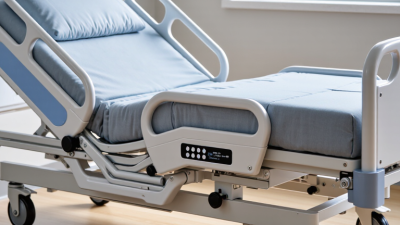
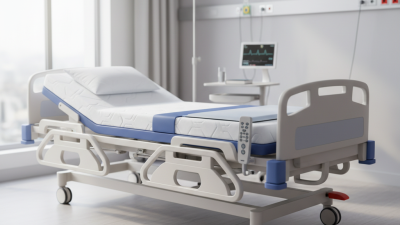
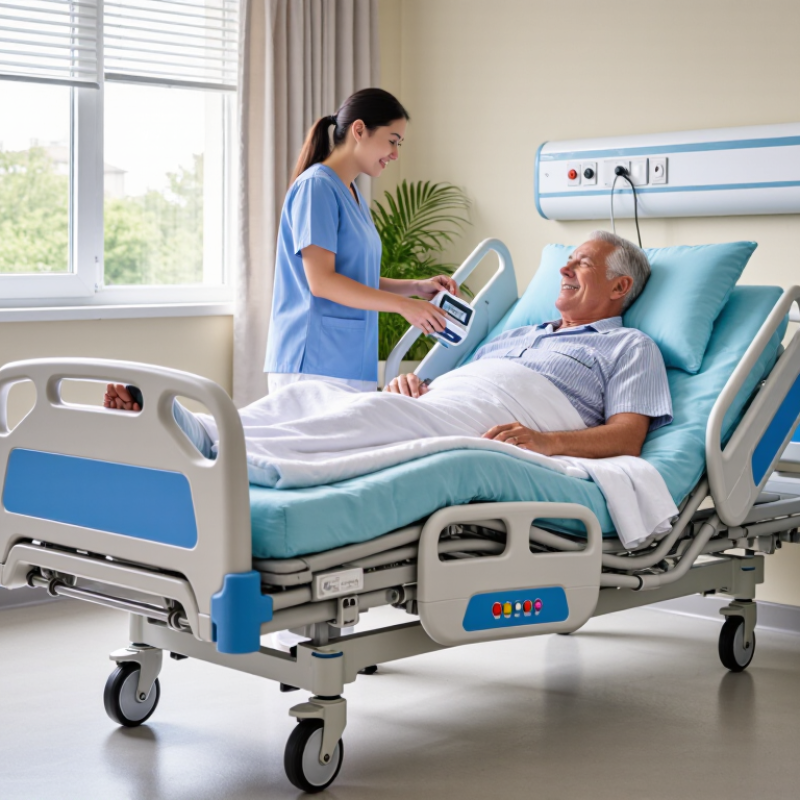
A double-shake nursing bed is a care bed with two independent movement adjustments. One raises the backrest. The other lifts or bends the leg section. Together, they create sitting, reading, eating, or resting positions. This design is simpler than a three-function bed, but that does not make it unsuitable.
It is intended for older adults, people with reduced mobility, and patients recovering after certain procedures. It can help users change posture without pulling hard on their shoulders. Caregivers may also gain safer access during dressing, feeding, or routine observation. A High-Quality Double Shake Nursing Bed should move steadily, lock securely, and support the user without excessive gaps. Check its weight capacity, mattress size, caster brakes, side-rail clearance, and lowering options before purchase. These details matter beside a real bed.
Clinical suitability still depends on the user’s condition and transfer ability. A person with poor trunk control may need more support than two adjustments provide. Some users also slide forward when the backrest rises. That risk is easy to underestimate. In practice, a nurse or therapist should assess posture, skin pressure, and transfer technique. Caregivers should test the controls and listen for unusual motor noise. Keep cables away from wheels. I would not choose by adjustment count alone. Comfort, cleaning access, and daily handling often decide whether the bed works well. Even experienced buyers can miss this.
Which Is the Best China Double-Shake Nursing Bed?
A double-shake nursing bed provides two independent adjustments: backrest elevation and leg-rest elevation.
The chart shows typical maximum adjustment angles used for double-shake nursing beds. The backrest adjustment supports sitting up, feeding, reading, and easier breathing, while the leg-rest adjustment helps raise the lower legs and improve comfort. These beds are commonly intended for older adults, people with limited mobility, post-operative recovery, and long-term home or residential care.
Set Clinical Benchmarks: 60–70° Backrest and About 30° Knee Lift
Which Is the Best China Double Shake Nursing Bed?
A strong nursing bed should be judged by clinical movement, not decoration. The backrest should reach 60–70°, while the knee section should lift about 30°. These settings help patients sit higher during meals, conversations, and breathing exercises. They also reduce sliding toward the footboard.
Clinical practice still requires caution. Common enteral-feeding guidance often recommends a 30–45° head elevation, not automatically 60–70°. Higher angles may support communication, but they can increase shear if the pelvis is poorly supported. The National Pressure Injury Advisory Panel emphasizes repositioning, skin inspection, and pressure redistribution. Angle alone is not treatment.
AHRQ reports approximately 3–5 hospital falls per 1,000 bed-days. That figure makes controlled adjustment important. A nurse should raise the backrest slowly, check the patient’s hips, and confirm both feet remain supported. The 30° knee lift can reduce forward migration, but individual anatomy changes the result. This is where some product testing falls short.
A reliable Double Shake Nursing Bed Manufacturershould document angle accuracy, load testing, emergency lowering, and gap safety. IEC 60601-2-52 provides relevant safety requirements for Medical Beds. Buyers should request test records, not trust a catalog number. The best bed is not always the one with the highest angle. It is the one that holds the patient steadily, even when real clinical conditions become messy.
Verify Safety Under YY 9706.252-2021 and IEC 60601-2-52
Which Is the Best China Double Shake Nursing Bed?
Safety verification should guide every purchase. YY 9706.252-2021 and IEC 60601-2-52 define critical requirements for medical beds. These include stability, moving parts, side rails, electrical safety, and unintended movement. A reliable evaluation checks test records, not attractive brochures.
The World Health Organization reports about 684,000 fatal falls worldwide each year. Adults over 60 suffer the greatest number of fatal falls. This makes rail gaps, mattress compression, and backrest movement important inspection points. FDA Hospital Bed System Dimensional and Assessment Guidance also highlights entrapment zones around rails, mattresses, and deck sections. Measure them with the actual mattress installed. Small gaps can become serious hazards.
For Double Shake Nursing Bed Manufacturers , ask for reports covering earth continuity, leakage current, electromagnetic compatibility, and mechanical endurance. Inspect the castors on a sloped floor. Test the emergency lowering function with the backrest raised. Listen for irregular actuator noise. It may indicate future failure. I would also review maintenance intervals and operator training records, because compliance can weaken during daily use. Certification alone is not enough. A supplier should explain test methods, sample configuration, and corrective actions. Some documentation may look complete, yet omit mattress thickness or patient weight assumptions. That detail deserves a second review.
Check 150–250 kg Safe Working Load, Frame Steel, and Mattress Fit
Which Is the Best China Double Shake Nursing Bed?
A reliable China double shake nursing bed should match the user’s weight, movement, and care routine. Check the safe working load carefully, not only the patient’s current weight. A 150 kg rating may suit one resident, while a 250 kg rating offers more practical reserve. Include the mattress, bedding, side rails, and daily accessories in your calculation. Ask for load-test records and clear instructions from the manufacturer. Marketing numbers alone are not enough.
Frame steel strongly affects stability, durability, and cleaning performance. Inspect the welds, joints, crank supports, and leg connections closely. Powder-coated steel can resist moisture, but damaged coating may eventually expose the metal. I prefer a frame that feels steady during backrest adjustment, without sharp edges or excessive noise. In real care settings, small weaknesses become obvious quickly. Still, visual inspection cannot replace documented material and performance testing.
Mattress fit deserves equal attention. Measure the bed platform, corner angles, and side gaps before ordering a replacement mattress. A mattress that is too short can leave uncomfortable spaces near the head or foot. One that is too wide may interfere with the backrest or side rails. Check the recommended thickness and compression level as well. I once underestimated mattress firmness, and repositioning became harder than expected. That mistake changed my purchasing checklist. Safety depends on the complete bed system, not the frame alone.
Screen Side Rails and Gaps Against the 60–120 mm Entrapment Range
Which Is the Best China Double Shake Nursing Bed?
Choosing a China double shake nursing bed requires more than checking its motors and lifting range. Side-rail design deserves equal attention. Screen side rails should feel firm, move smoothly, and remain stable during repositioning. Their openings must be measured with the mattress installed, not on an empty frame.
The 60–120 mm entrapment range needs careful screening. Any opening within this zone deserves investigation. Check the spaces between the rail and mattress, beneath the raised rail, and near the head and foot sections. A soft mattress can compress and create a wider passage. Movement can also change the gap.
Measure twice.
A practical inspection should use calibrated gauges and repeat tests at different bed angles. Observe the rail after shaking, locking, and lowering the backrest. A responsible Double Shake Nursing Bed Exporter should provide drawings, load-test records, and gap-measurement results. However, documents alone are not enough. One common mistake is trusting a neat appearance. Hidden gaps may appear only after repeated operation, and this is where product reviews should remain honest. Staff training and routine checks still matter.
Select the Best China Model with a Weighted Price–Safety Scorecard
Which Is the Best China Double Shake Nursing Bed?
The best China double shake nursing bed is not always the cheapest model. A weighted price–safety scorecard gives procurement teams a clearer comparison. I would assign safety 45%, usability 20%, durability 15%, service 10%, and price 10%. This weighting reflects real bedside risks, not showroom appearance.
The World Health Organization’s Global Patient Safety Report 2024 states that one in ten patients experiences harm in healthcare. More than half of this harm is considered preventable. Therefore, check guardrail gaps, mattress-platform stability, emergency lowering, wheel locks, and backrest movement. Require test records aligned with IEC 60601-2-52 and documented risk controls under ISO 14971. Ask for measured noise levels, not vague claims.
A practical scorecard can record each item from zero to five. Multiply every score by its assigned weight. For example, a model costing 20% less may still lose if its brake, rail, or actuator scores poorly. Confirm the bed supports the stated patient weight, especially during full elevation. Check the hand control beside a real mattress. Small details matter.
My initial weighting is imperfect. Rural facilities may value spare parts more heavily. A low purchase price can hide transport, repair, and training costs. Request a written warranty, replacement-part lead time, and installation procedure. Use published evidence, sample testing, and feedback from nurses before approval. Safety should be demonstrated, not merely promised.
Which Is the Best China Double Shake Nursing Bed? - Select the Best China Model with a Weighted Price–Safety Scorecard
Comparative procurement scorecard for double-shake nursing beds manufactured in China. “Double shake” refers to independent backrest and leg-rest adjustment. Scores are based on published specification ranges commonly used for hospital and home-care bed procurement; final specifications, certificates, load tests, warranty terms and after-sales coverage should be verified before purchase.
Anonymous
Model | Bed Type | Adjustment
Method | Backrest
Angle | Leg-rest
Angle | Safe Working
Load | Side Rails &
Braking | Safety Documentation | Indicative FOB
Price | Warranty | Weighted
Safety Score | Weighted
Price Score | Total
Score | Procurement
Recommendation |
| Model C | Electric double-shake nursing bed | Two electric actuators with wired handset | 0–70° | 0–40° | ≥250 kg | Full-length split rails; four locking casters | IEC 60601-2-52 test report or equivalent technical evidence required | US$420–560 | 24 months | 31.5 / 35 | 11.0 / 15 | 86.5 / 100 | Best overall balance |
| Model D | Electric double-shake nursing bed | Two electric actuators with wired handset | 0–70° | 0–40° | ≥220 kg | Full-length split rails; four locking casters | Electrical safety and EMC documents available upon request | US$360–480 | 18 months | 29.5 / 35 | 14.0 / 15 | 85.5 / 100 | Best value |
| Model E | Manual double-shake nursing bed | Two hand cranks | 0–75° | 0–40° | ≥200 kg | Foldable rails; four locking casters | Mechanical load documentation; electrical certification not applicable | US$220–320 | 12 months | 25.0 / 35 | 15.0 / 15 | 80.0 / 100 | Budget option |
| Model A | Electric double-shake nursing bed | Two electric actuators with wired handset | 0–65° | 0–35° | ≥200 kg | Half-length rails; four locking casters | Supplier declaration; independent test evidence to be confirmed | US$330–450 | 12 months | 25.5 / 35 | 13.0 / 15 | 78.5 / 100 | Verify safety file |
| Model B | Manual double-shake nursing bed | Two hand cranks | 0–70° | 0–35° | ≥180 kg | Half-length rails; two locking casters | Basic mechanical specification only | US$190–280 | 12 months | 21.5 / 35 | 15.0 / 15 | 76.5 / 100 | Lowest initial cost |
Manual Three-Crank Hospital Bed HR-S05: Features, Benefits, and Buying Guide
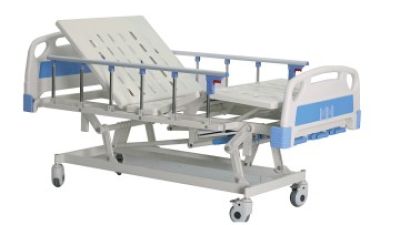
The Manual Three-Crank Hospital Bed HR-S05 is designed for hospitals, nursing homes, rehabilitation centers, and home-care environments that need dependable positioning without relying on electrical power. Measuring L2050 × W960 mm, with an adjustable height range of 430–700 mm, the bed provides a practical working platform for both patients and caregivers. Its three hand cranks can be used to adjust the backrest, leg section, and overall bed height, supporting more comfortable rest, examination, transfers, and routine nursing care.
Manual adjustment can also help facilities control operating and maintenance costs, especially where electrical infrastructure is limited or backup power is a concern. The variable height allows caregivers to work at a more suitable level, while the lower position can make patient access and transfers more manageable. The WHO and UNICEF *Global Report on Assistive Technology* estimates that more than 2.5 billion people need at least one assistive product, highlighting the importance of accessible and adaptable care equipment. When purchasing, buyers should check frame stability, crank smoothness, mattress compatibility, load capacity, caster performance, side-rail options, and the availability of replacement parts.
For long-term value, compare the bed’s adjustment range with the clinical tasks it will support, assess cleaning and disinfection requirements, and confirm that its dimensions fit through doors, elevators, and treatment spaces. A clear maintenance schedule and staff training can further improve safe, consistent operation.
Conclusion
Choosing the best China Double Shake Nursing Bed requires more than comparing prices or appearance. A double-shake design typically provides independent backrest and knee-section adjustments, supporting users who need improved comfort, repositioning, or assisted nursing. Clinical benchmarks should include a backrest angle of approximately 60–70° and a knee lift near 30°, while overall performance should be verified against YY 9706.252-2021 and IEC 60601-2-52 requirements. Buyers should also confirm a safe working load of about 150–250 kg, a durable steel frame, and a mattress that fits securely without excessive movement.
Safety details deserve equal attention. Side rails, gaps, and moving sections should be assessed carefully, especially within the 60–120 mm entrapment range. Motor reliability, caster locking, operating noise, warranty coverage, and ISO 13485 evidence can distinguish dependable products from less consistent options. A weighted price–safety scorecard that prioritizes patient protection, adjustment performance, maintenance support, and verified documentation offers a practical way to select the most suitable model.